
On this page
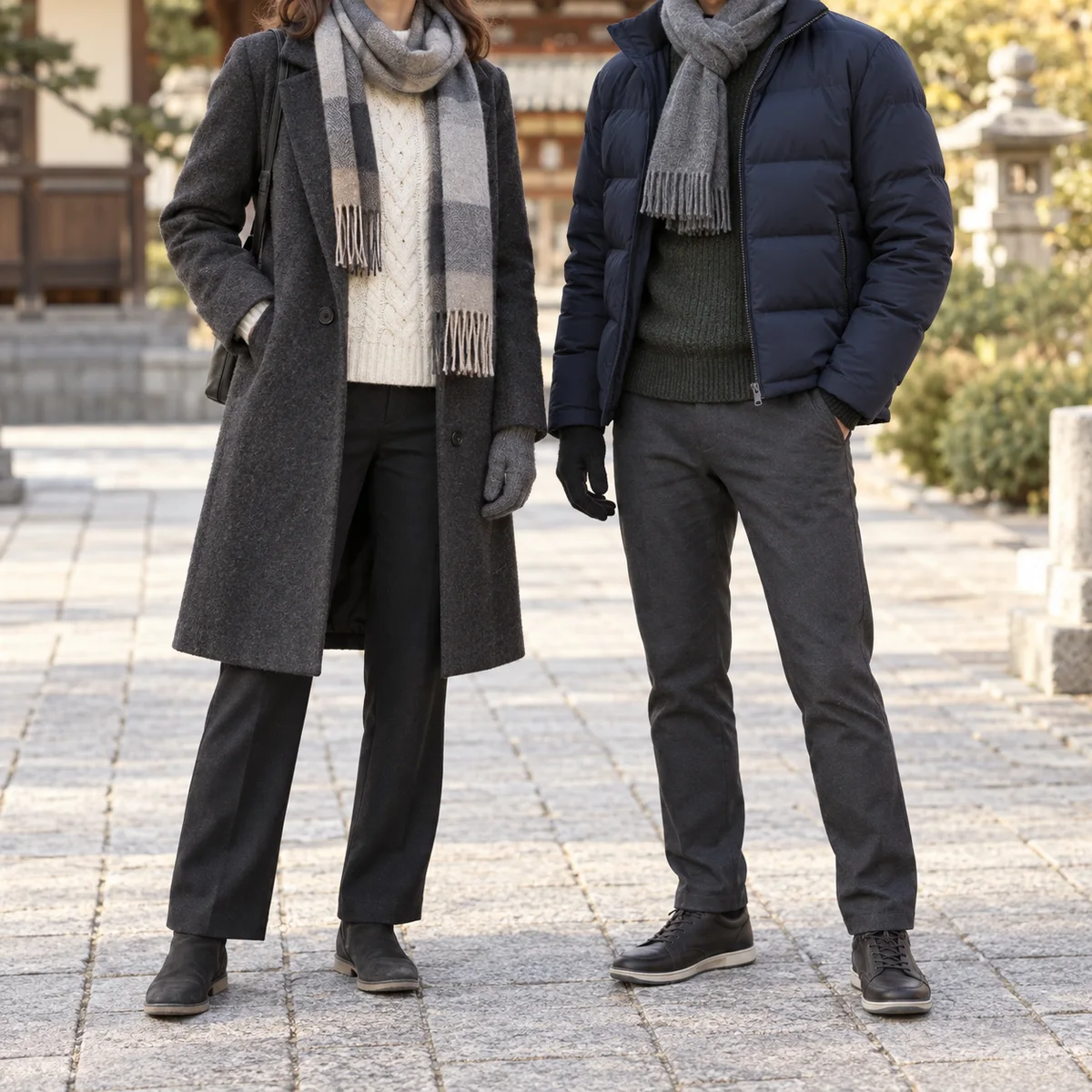
For winter sightseeing in Tokyo, Kyoto and Osaka, start with a long-sleeve top, sweater or fleece, warm coat, long trousers and comfortable closed shoes. Add a scarf and gloves for cold mornings and evenings. Hokkaido and snowy stops need warmer layers and winter footwear; Okinawa usually needs a much lighter outfit.
Your destination, forecast and time outdoors decide how much to pack. A shopping day with heated train rides needs a different balance from standing outside at a winter illumination or walking through snow. The tables below help you choose before reading the monthly details.
Jump to December, January, February, sneakers vs. snow boots, or the Hokkaido packing list.
Still choosing your dates or destinations? Our Japan winter travel guide compares December, January and February, city stays and snow-country trips, plus New Year openings and what to book first.
This article contains affiliate links. We may earn a commission when you book through them, at no extra cost to you.
Winter Outfits at a Glance
For a route that mixes mild cities and snowy stops, use our Japan Packing Planner to combine the layers into one checklist and work out how many changes to bring between wash days.
| Your itinerary | What to pack |
|---|---|
| Tokyo, Kyoto or Osaka | Long-sleeve top, sweater, warm coat, long trousers and closed shoes. Add scarf and gloves for cold evenings. |
| Kanazawa or wet snow | Warm layers plus weatherproof outerwear and waterproof footwear. Choose winter soles and insulation for snowy or icy conditions. |
| Hokkaido or snowy mountains | Thermals, insulating mid-layer, warm coat and insulated winter boots. Add gloves, an ear-covering hat and scarf. |
| Okinawa only | Light tops, long trousers, comfortable shoes and windbreaker. Add a sweater for cooler days. |
| Tokyo plus snow country | Reuse base and mid-layers. Bring outerwear and footwear for the coldest stop; remove layers in milder cities. |
Check the forecast for every overnight stop and colder day trip 3-5 days before departure, then again during your trip. Look at the overnight low, wind, rain, snow and road conditions. A Tokyo forecast does not tell you what shoes to wear in Sapporo or a mountain onsen town.
Part of our What to Wear in Japan guide. For a trip beginning in November, use the autumn clothing guide alongside this one. For a trip continuing into March, check the spring guide, especially before assuming Hokkaido has warmed up.
Which climate region is my destination?
Type a city or prefecture to find which section of this guide to follow.
What to Wear in Japan in December
For a Tokyo-Kyoto-Osaka route, pack a long-sleeve base, sweater or fleece, warm coat, long trousers and walking shoes. Keep gloves and a scarf in your day bag rather than buried in your suitcase. Add a thin thermal layer if you feel the cold or expect long stretches outdoors.
Tokyo's December normal is about 12°C by day and 4°C at night. A sunny afternoon can feel manageable while the same outfit feels too light after sunset. Leave room under your coat for another layer instead of packing a second bulky coat for evenings.
- City sightseeing: choose layers that fit in your day bag when removed. Avoid a tight coat that only fits over a thin shirt.
- Evening illuminations: add gloves, a scarf and a warm hat for longer outdoor stops. Standing still can feel colder than walking between shops.
- Hokkaido: pack for snow and freezing conditions. Sapporo's December normals are 2°C / -4°C, but your actual travel days may be colder.
- Kanazawa or snowy inland stops: prepare for wet weather and slush as well as cold. Check each destination rather than applying Tokyo's relatively dry winter pattern everywhere.
Late November into Early December
You can often reuse the long-sleeve tops, sweater and coat from a late-November city trip. The useful additions are a warmer removable layer, gloves, scarf and socks suited to longer cold evenings. Check whether your existing coat has enough room for them.
The calendar boundary is not a weather switch. Do not buy snow boots just because your Tokyo trip reaches December, but do not postpone winter preparation for a snowy Hokkaido stop because the trip starts in November. Use the conditions on the coldest part of your route to decide.
What to Wear in Japan in January
For Tokyo, Kyoto and Osaka, start with your warm coat, sweater or fleece and long trousers. Add thermal underwear according to the forecast, your cold tolerance and how long you will be outside. Gloves, scarf and a hat become particularly useful for early starts and evening plans.
Tokyo's January normals are around 10°C / 1°C. For temple visits, think about socks as well as your coat: some interiors require removing your shoes. Keep your mid-layer easy to unzip or take off when you return to a heated train or café.
- All-day city route: a breathable base and removable warmth are more flexible than automatically wearing your heaviest thermals.
- New Year shrine queues: prepare for time standing outdoors; warm feet and hands matter as much as an extra sweater.
- Sapporo or a snow resort: use the snow-country kit below. Sapporo's normal daily high and low are -0.4°C / -6.4°C, not the limit of how cold a particular day can become.
Disposable hand warmers can be a useful extra. Buy the type intended for its placement and follow the package instructions; they supplement suitable clothing rather than replace it.
What to Wear in Japan in February
Keep the winter coat and layers. Early blossoms or a sunny afternoon do not make February a spring packing month. Tokyo's normals are about 11°C / 2°C, while Sapporo remains wintry at 0.4°C / -6.2°C.
For a city route, use the same basic outfit as January and adjust the thermal layer to the forecast. If you plan to photograph plum blossoms, attend an illumination or spend an evening outside, carry your gloves and scarf even when the daytime walk starts comfortably.
- Hokkaido: keep insulated winter footwear and full accessories. Snow-event sightseeing can involve much more time outdoors than a normal city day.
- Wet or snowy regions: do not drop waterproof footwear because spring is approaching elsewhere.
- Late February into March: keep the warm coat available and use the March clothing advice for the next part of your route. Northern and mountain destinations can remain in winter conditions.
Regional Differences: What Winter Actually Looks Like
These are monthly averages of daily highs and lows, in Celsius, from JMA's 1991-2020 normals. They are neither a forecast nor the coldest temperatures you might encounter. For reference, 0°C is 32°F and 10°C is 50°F.
| Reference city | December high / low | January high / low | February high / low |
|---|---|---|---|
| Tokyo | 12.0°C / 3.8°C | 9.8°C / 1.2°C | 10.9°C / 2.1°C |
| Kanazawa | 10.2°C / 3.5°C | 7.1°C / 1.2°C | 7.8°C / 1.0°C |
| Sapporo | 2.0°C / -4.0°C | -0.4°C / -6.4°C | 0.4°C / -6.2°C |
| Naha | 21.5°C / 16.8°C | 19.8°C / 14.9°C | 20.2°C / 15.1°C |
Sources: JMA normals for Tokyo, Kanazawa, Sapporo and Naha, checked September 25, 2026.
Use Tokyo as a clothing starting point for lowland city sightseeing in Kyoto and Osaka, not as their exact weather forecast. Northern Japan, inland basins, higher elevations and exposed coastlines need their own checks. A coat suitable for a Tokyo afternoon may need extra layers on a cold morning near Lake Kawaguchiko.
Wet Snow: Japan Sea Side Outfit
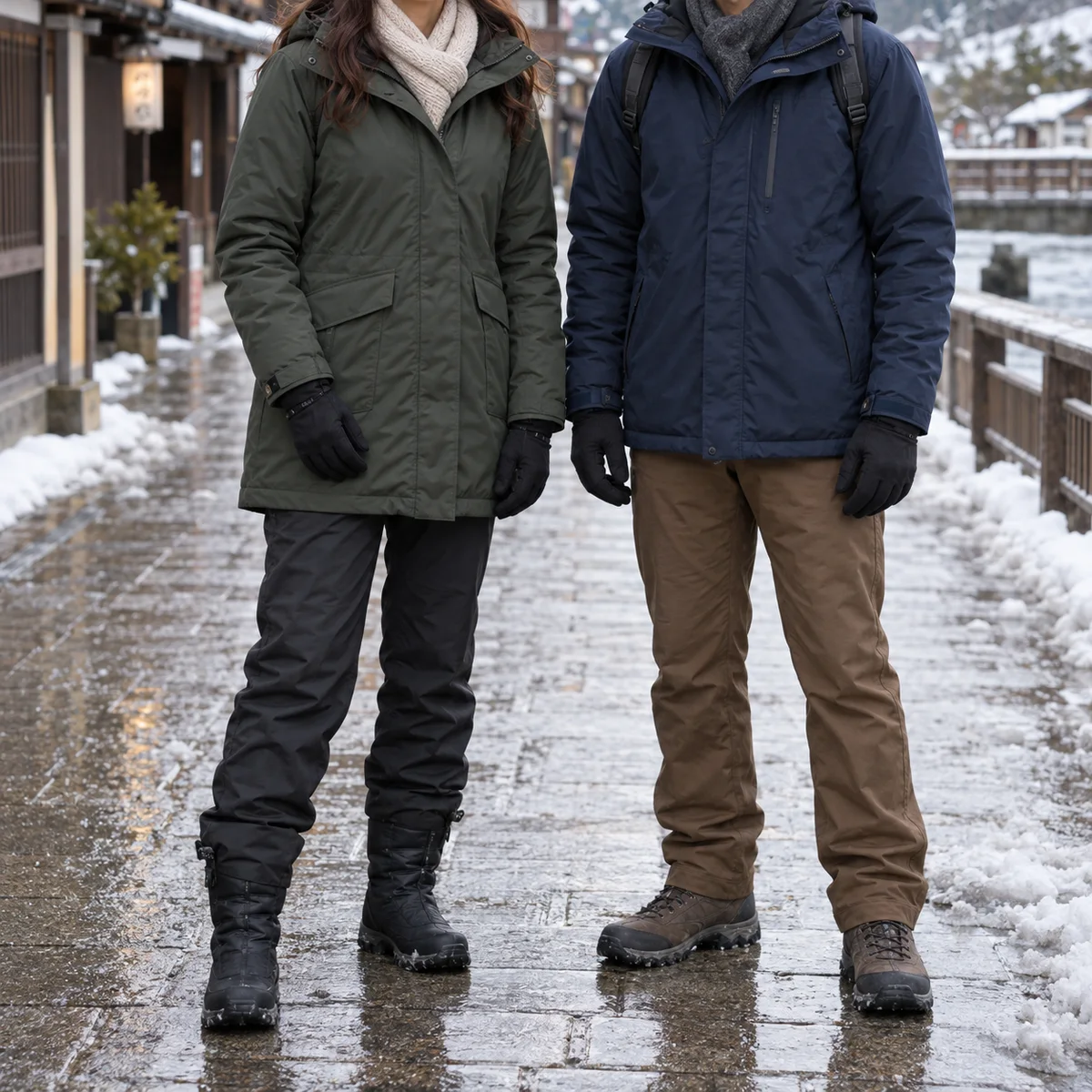
Warmth and weather protection are separate decisions. For a wet city day, a waterproof shell over insulation can be more practical than an unprotected wool coat. Mountain destinations such as Takayama and Shirakawa-go can require more insulation and snow equipment than coastal Kanazawa; do not treat a regional label as a single temperature.
Mild and Windy: Okinawa Outfit
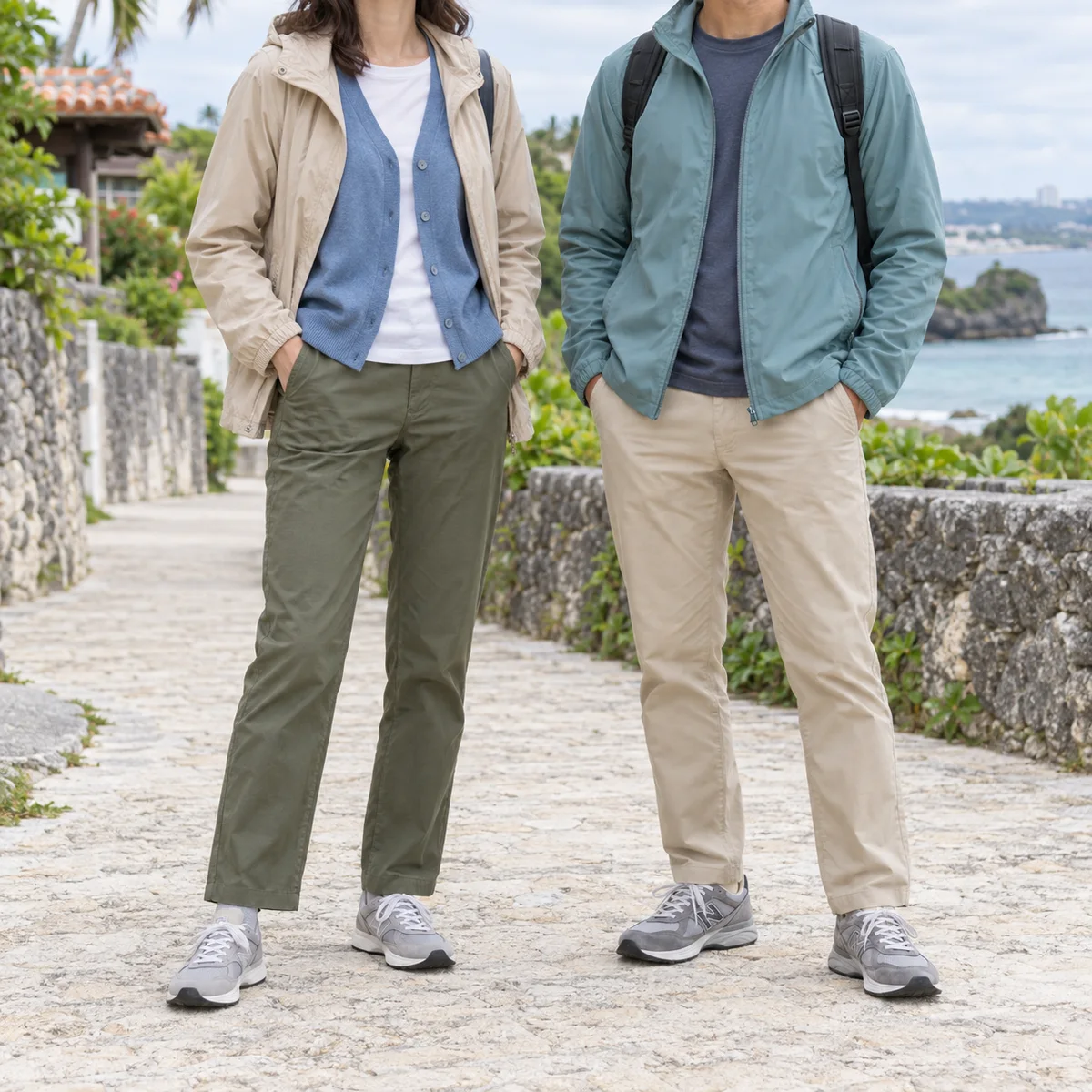
For an Okinawa-only trip, leave the mainland snow kit out unless your forecast or activities call for it. The official Okinawa December guide recommends bringing long sleeves, a sweater or jacket and closed shoes for colder days. A coast or ferry trip may call for more wind protection than walking around town.
The Layering Strategy for Japan's Winter
The awkward part of a winter city day is going between cold streets and heated buildings. Wearing every warm item at breakfast can leave you uncomfortable on the train before the sightseeing has even started.
A single heavy parka with a t-shirt underneath gives you few comfortable choices when you take the coat off. Living here, I watch tourists make this mistake every winter. A base you can wear indoors, a removable mid-layer and an outer layer give you more control.
Do You Need HEATTECH Every Day?
No. Start with the day's forecast and plans. A thermal base can help on cold days, for travelers who feel the cold, or for long outdoor stops. For active city walking and frequent heated interiors, a lighter base may be more comfortable than the warmest thermal option.
UNIQLO describes regular, Extra Warm and Ultra Warm HEATTECH as different warmth levels. Choose a weight you can wear comfortably beneath the rest of your outfit. Those product names are not a universal temperature prescription, and you do not need that brand to dress in layers.
Thermal leggings are harder to remove during a day out than a fleece. Decide on them before leaving the hotel based on your route, rather than assuming that top and bottom thermals must always be worn together.
Choose a Mid-Layer You Can Remove
A sweater, fleece or light insulated layer should fit under your coat without restricting movement. A zip-up layer is convenient when you keep moving between streets, shops and trains. Try the whole outfit together before packing, including your day bag and coat.
Carry somewhere to put the layer you remove. A small packable bag may be more useful than another sweater, especially when your usual day bag is already full of a camera, water and other essentials.
Down Jacket or Wool Coat?
Either can work for dry city sightseeing if it is warm enough for you. Choose based on warmth, room for layers, weight and how you will carry it indoors. A packable insulated jacket is convenient for a trip with many train journeys; a wool coat may suit a city itinerary if its weight and bulk work for your luggage.
For wet snow or rain, check the garment's weather protection separately. Down does not automatically mean waterproof, and a warm wool coat does not replace rain protection. In snowy or exposed places, consider a hood, cuffs and coverage as well as insulation.
Winter Shoes: Sneakers or Snow Boots?
Choose for the surface you will walk on, not just the month. December in central Tokyo and December on a snowy Sapporo pavement can call for different shoes.
| Conditions on your route | Footwear starting point |
|---|---|
| Dry, snow-free city streets | Broken-in closed walking shoes or sneakers with comfortable socks |
| Cold rain or slush | Footwear that keeps water out; add suitable insulation and winter soles if snow or ice is expected |
| Snowy or icy streets | Insulated winter footwear with soles intended for winter conditions; waterproofing alone does not provide ice grip |
For Tokyo plus Hokkaido, choose the snowy-stop footwear first. A second pair of city shoes is optional if your winter pair is comfortable for the whole route. Do not rely on thin sneakers and an airport shopping stop before your first icy walk. Sapporo's official winter clothing guide describes freezing road surfaces and recommends footwear with grip.
Can You Wear Sneakers in Tokyo, Kyoto and Osaka?
For dry, snow-free city sightseeing, comfortable closed walking shoes or sneakers can work with suitable socks. You do not automatically need snow boots for every winter trip to Japan.
Check what happens when the shoes get wet and whether the sole is worn smooth. Thin mesh shoes may be less comfortable in cold rain, and a fashion boot is not necessarily a winter boot. Fit and walking comfort still matter: you may spend several hours on your feet.
When to Bring Winter Boots
Change the plan when your itinerary includes snow, ice or slush: Hokkaido, a snowy onsen town or mountain sightseeing can require different footwear from the city where you land. Look for waterproofing, insulation appropriate to your route and a sole intended for winter surfaces. Waterproof sneakers alone do not solve the problem of grip on ice.
The official Sapporo winter advice recommends small, slow steps on frozen roads and describes removable nonslip grips sold locally. No boot guarantees traction on every icy surface. If using removable grips, follow their instructions and remove them where required, including unsuitable indoor surfaces.
Try boots with the socks you plan to wear; stuffing thick socks into a tight shoe is not a useful upgrade. Bring suitable footwear for arrival rather than depending on finding a particular size before your first snowy walk.
Hokkaido Winter: A Separate Packing List
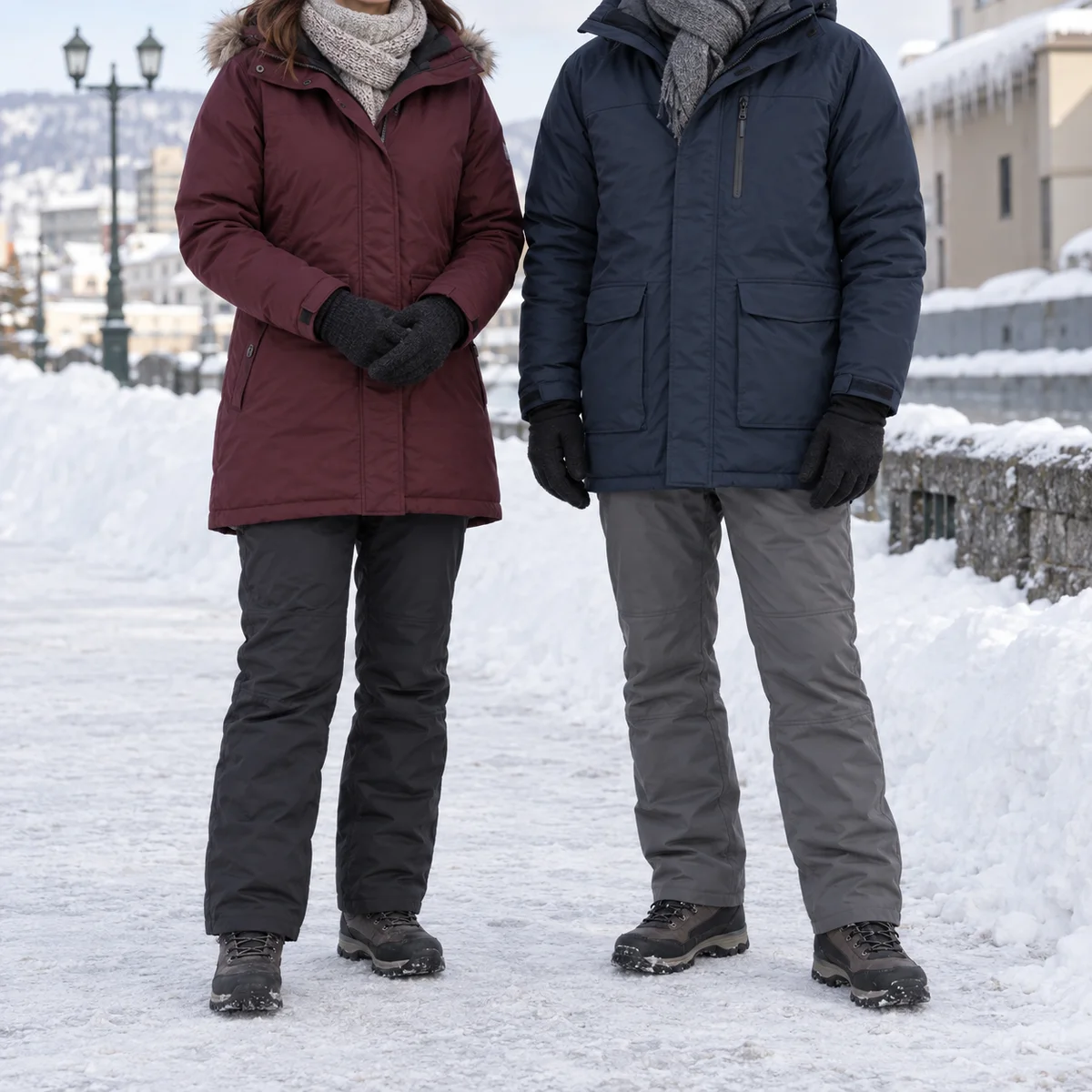
Use the Sapporo figures as a city reference, not a promise for all of Hokkaido. Your destination, elevation, wind and time outdoors determine the extra warmth. A short walk from a station and an evening looking at snow sculptures are different packing problems.
| Item | What to check |
|---|---|
| Warm, wind-resistant outer layer | Room for insulation; protection suited to the snow or rain forecast |
| Thermal base and insulating mid-layer | Comfortable fit together; warmth appropriate to your activity |
| Insulated winter footwear | Weather protection, winter soles and room for your socks |
| Gloves, ear-covering hat, scarf or neck gaiter | Useful warmth without relying on another bulky coat |
| Warm trousers or an extra lower-body layer | Enough warmth for longer outdoor stops |
| Spare dry socks | A change if footwear or snow activities leave socks damp |
If you are also visiting Tokyo, reuse the base and mid-layers and wear fewer of them on mild days. Decide whether a second pair of city shoes is worth the space. You generally gain more flexibility from layers than from packing two complete wardrobes.
Winter Packing List
This is an example for about a week of city sightseeing with one laundry stop, not a requirement to buy everything. For a longer trip, add laundry opportunities before doubling the quantities.
Tokyo, Kyoto and Osaka: City Clothing
- Long-sleeve tops or light base layers: 2-3
- Sweaters or fleece mid-layers: 1-2
- Warm coat that fits over the layers: 1
- Long trousers: 2, or an equivalent outfit with suitable warm legwear
- Underwear and socks: enough to reach your laundry day and allow drying time
- Comfortable closed walking shoes
- Scarf and gloves; a hat for colder forecasts and longer outdoor stops
- Thermal top or bottoms if your forecast, activity and cold tolerance call for them
Add for Snow, Slush or Colder Destinations
- Insulated winter footwear suited to snow and ice
- Weatherproof outer layer where rain or wet snow is expected
- Warmer gloves, an ear-covering hat and neck protection
- Extra base or lower-body insulation for extended cold exposure
- Spare dry socks and any traction aids suitable for your footwear and route
Okinawa Only: Use a Lighter Kit
Start with light tops, long trousers and comfortable closed shoes. Add a sweater and windbreaker for cooler days and coastal wind. The mainland coat, heavy thermals and snow boots are not default requirements for an Okinawa-only sightseeing trip.
Small Extras for Any Route
- A day bag with space for removed layers
- Rain protection appropriate to the forecast
- Lip balm, hand cream and any personal essentials
- Power bank; keep your phone and spare camera batteries protected from prolonged cold
- Sunglasses for bright conditions, especially around snow
What You Can Buy After Arrival
Extra layers, socks and hand warmers can be convenient local purchases. Bring enough clothing and the right shoes to get from the airport to your accommodation comfortably. A late arrival, a holiday closure or unavailable sizes can make a planned shopping stop impractical.
Check current prices and availability before relying on a particular product. Buying in Japan is not automatically cheaper than buying at home. If eligible, use our tax-free shopping guide to check the rules that apply on your purchase date.
 Code JAPANODE · 6% off
Radical Storage — Luggage Storage Across Japan
Why it may fit
Winter is the bulkiest packing season — coats, boots, and the UNIQLO haul you didn't plan for. On checkout days and city transfers, coin lockers often can't fit a winter-sized suitcase. Radical Storage lets you drop bags by the day at vetted spots near stations and sights. Use code JAPANODE for 6% off.
Before booking
Check the live price, availability, eligibility, and terms before paying.
Winter Activities and What to Wear for Them
Still choosing what to do? Explore seven winter experiences in Japan, from onsen evenings to snowy train journeys.
Onsen (Hot Springs)
Dress for the walk to the bath or ryokan as carefully as for the bath itself. A light yukata supplied by an inn is not a substitute for your outdoor coat and shoes on a cold walk through town. Ask what garments and towels the property provides before packing duplicates.
For bathing etiquette and facility-specific tattoo rules, use our onsen and tattoo guide. A private bath is not an automatic exception to every property's rules; confirm the exact facility before booking.
Skiing and Snowboarding
Everyday city clothing is not a ski outfit. Check what your rental includes: equipment, outerwear and accessories may be separate, and sizes should be confirmed before travel. Pack the base layers, socks and personal items your chosen rental does not supply.
Our guide to skiing in Japan compares day trips, beginner stays and ski holidays. For coverage questions, use the Japan ski travel insurance checklist to check your planned activities and policy terms.
 Fixed-trip first quote
Heymondo Travel Insurance
Medical and cancellation cover for a fixed-date winter trip
Why it may fit
Icy sidewalks injure travelers every winter, and Japan has no free healthcare for tourists. For a set-date holiday, compare the Heymondo quote and issued medical limits before you fly. Skiing and rescue require an exact policy check. Heymondo excludes US residents; readers receive 5% off where eligible.
Before booking
Check the live price, availability, eligibility, and terms before paying.
Winter Illuminations and New Year Shrine Visits
For an evening of lights or a slow-moving shrine queue, add warmth for standing still, not just walking. Gloves you can use with your phone, a hat and warm socks can be more practical than another bulky item in the suitcase. Keep an easy option to go indoors and warm up.
Temple Visits and Mount Fuji Day Trips
At temples where shoes come off, clean warm socks earn their space. Choose shoes that are practical to remove without sacrificing the grip needed outside. For a Mount Fuji day trip, check the destination forecast and conditions: a lakeside stop, exposed viewpoint or mountain area needs its own clothing decision.
Final Check Before Closing Your Suitcase
Put on one complete outfit, including the coat, shoes and day bag. Can you walk comfortably, remove a layer, carry it and put it back on? Check that your gloves and socks work with the rest of the outfit. Then review the coldest and wettest stops on your actual itinerary.
If your trip crosses seasons, compare the late-November outfit or March packing advice without discarding the winter equipment a snowy stop still needs.
Climate figures and linked clothing guidance checked September 25, 2026; the linked Sapporo footwear guidance rechecked October 14, 2026. JMA normals describe long-term averages, not your travel dates. Outfit combinations and packing quantities are editorial suggestions; adjust them for the forecast, activities and your own comfort. Recheck local weather, road conditions, shop availability and activity requirements before travel.
Make it your trip
Still planning your Japan trip?
Pick the question on your mind. Compare your options, check the details and take one more thing off your list.
Which eSIM fits your Japan trip?
Maps, messages, hotspot use: compare five providers by data allowance, network and plan limits before you choose.
Find my Japan eSIM
What should your travel insurance cover?
Compare medical cover, cancellation and activity limits across five options, with the exclusions worth checking.
Compare cover & limitsWould a JR Pass save you money?
Add your train journeys and compare individual tickets with the nationwide pass. See which costs less for your route.
Calculate my rail costsFrequently Asked Questions
For Tokyo, Kyoto and Osaka, start with a long-sleeve top, sweater or fleece, warm coat, long trousers and comfortable closed shoes. Add a scarf and gloves for early starts and evenings. For Hokkaido or a snowy mountain stop, add thermal layers and insulated winter footwear suitable for snow and ice. Okinawa needs lighter layers and a windbreaker.
Comfortable closed sneakers can work for dry, snow-free city sightseeing in Tokyo, Kyoto or Osaka. Check the forecast and road conditions. Mesh shoes are less useful in cold rain or slush; snowy destinations need footwear designed for those conditions. Waterproofing alone does not provide grip on ice.
Not automatically for a city-only trip on dry, snow-free days. Warm socks and comfortable walking shoes may be enough. Reconsider if snow or freezing conditions are forecast, or if your itinerary includes mountain areas, snowy onsen towns or Hokkaido. Choose shoes for the actual route, not just the arrival city.
No. Thermal layers are useful for cold forecasts, long outdoor stops and travelers who feel the cold, but the warmest version can be uncomfortable during active city sightseeing and heated train journeys. Choose the weight for your day and keep a removable sweater or fleece above it.
Either can work for dry city sightseeing if it is warm enough and fits over your layers. A packable insulated jacket can be easier to carry indoors. For wet snow or rain, check weather protection separately: neither the word down nor wool guarantees a waterproof outer layer.
Reuse your base layers and mid-layers, then bring an insulated outer layer and winter footwear for the snowy part of the route. Add gloves, an ear-covering hat and a scarf or neck gaiter. Wear fewer layers in Tokyo and pack a separate city shoe only if it earns its luggage space.
You can shop for extra layers after arrival, but bring enough warmth and suitable shoes for the airport-to-hotel journey. Do not rely on finding your size, a particular product or an open shop before your first snowy outing. Check current stock, opening hours and prices before planning a purchase.
Written by
JAPANODE
Based in Japan, sharing real travel tips & local insights for visitors. Follow us on Instagram @thejapanode for daily Japan content.
You Might Also Like
 Planning
Japan in Winter: Weather, Crowds & What to Book
13 min read
 Planning
How to Ski in Japan: A First-Timer's Planning Guide
12 min read
 Day Trips
Mt Fuji Day Trip from Tokyo: Tour, Train & Bus Compared (2026)
17 min read
 Culture
Japan Onsen Tattoo Rules: Etiquette & Where to Bathe (2026)
24 min read
 Planning
Japan Tax-Free Shopping 2026: Current Rules & Nov. 1 Change
15 min read
 Planning
What to Wear in Japan in Autumn: September, October & November Packing Guide
12 min read
 Planning
What to Wear in Japan in Spring: March, April & May Packing Guide
14 min read
 Planning
What to Wear in Japan: Month-by-Month Clothing Guide
14 min read