On this page
Bookmark this guide before your trip. You can also save it offline by adding the page to your reading list — Japan's airport WiFi is workable, but having key info offline saves time at the platform.
Japan's train system is widely considered the best in the world — punctual, clean, extensive, and incredibly efficient. But it can also be overwhelming for first-time visitors: multiple Shinkansen lines, IC cards with regional quirks, oversized-baggage rules that catch tourists off guard.
This guide breaks down what you actually need to know in 2026 to navigate Japan's trains with confidence — from buying your first ticket to understanding the Shinkansen and which trains your JR Pass actually covers.
Types of Trains in Japan
Japan has several types of train services. Here's how they fit together.
 Our Pick
Suica IC Card (Welcome Suica)
Why it may fit
Pre-loaded IC card for seamless travel on most trains, subways, and buses across major Japanese cities. Works in convenience stores and vending machines too.
Before booking
Check the live price, availability, eligibility, and terms before paying.
Shinkansen (Bullet Trains)
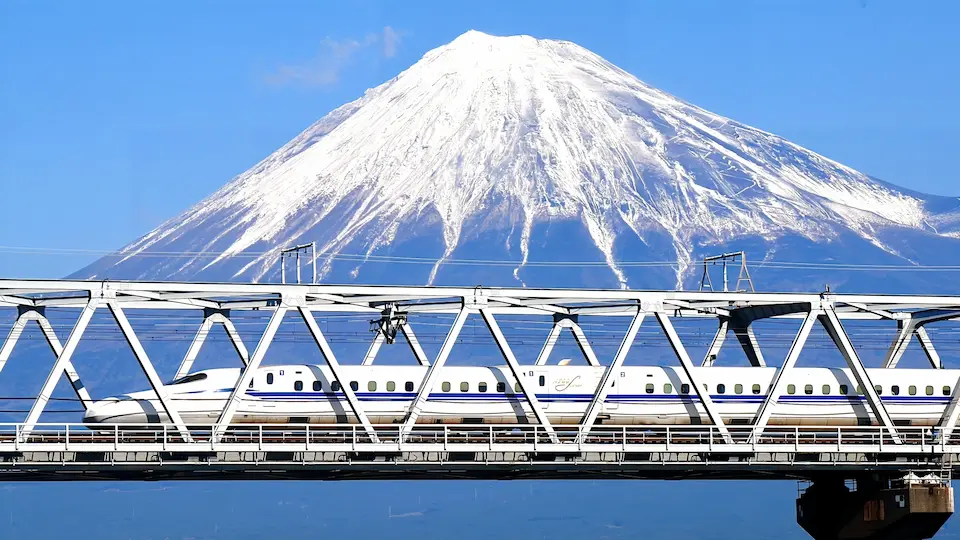
The Shinkansen is Japan's high-speed rail network, running at speeds up to 320 km/h. The main lines serve different regions:
| Line | Route | Notes |
|---|---|---|
| Tokaido | Tokyo → Nagoya → Kyoto → Shin-Osaka | The busiest line; runs Nozomi, Hikari, Kodama |
| Sanyo | Shin-Osaka → Hiroshima → Hakata (Fukuoka) | Continues from Tokaido; runs Nozomi, Mizuho, Hikari, Sakura, Kodama |
| Kyushu | Hakata → Kumamoto → Kagoshima-Chuo | Runs Mizuho, Sakura, Tsubame; some Sanyo services through-run |
| Nishi-Kyushu (West Kyushu) | Takeo-Onsen → Nagasaki | The newest line (2022) |
| Tohoku | Tokyo → Sendai → Aomori | Runs Hayabusa, Hayate, Yamabiko, Nasuno |
| Joetsu | Tokyo → Niigata | Runs Toki, Tanigawa |
| Hokuriku | Tokyo → Kanazawa → Tsuruga | Runs Kagayaki, Hakutaka, Asama, Tsurugi |
| Hokkaido | Shin-Aomori → Shin-Hakodate-Hokuto (continues from Tohoku) | Hayabusa, Hayate |
The Sakura runs on the Sanyo and Kyushu Shinkansen only (Shin-Osaka and west). For the Tokyo-Kyoto route, the JR Pass-eligible options are Hikari and Kodama — never Sakura. Some online guides repeat this error.
Nozomi and Mizuho with a JR Pass (the 2023+ Rule)
Nozomi (Tokaido/Sanyo) and Mizuho (Sanyo/Kyushu) are the fastest Shinkansen services. Since the October 2023 JR Pass price increase, JR Pass holders can ride them — but only by purchasing a separate NOZOMI/MIZUHO Ticket before boarding, in addition to the pass. The supplement is the same amount for ordinary, Green Car, reserved, and unreserved seats; check the official JR Pass site for the current price for your route.
If you don't want to pay the supplement:
- Tokyo → Kyoto / Shin-Osaka: use Hikari or Kodama
- Shin-Osaka → Hiroshima / Hakata: use Hikari, Sakura, or Kodama
- Hakata → Kagoshima-Chuo: use Sakura or Tsubame
The time difference on Tokyo-Kyoto is roughly 15-25 minutes vs Nozomi — usually not worth the supplement unless you're tight on schedule.
Local & Rapid Trains
Within cities and between nearby cities, you'll use:
- Local (各駅停車 kakueki-teisha, often just 各停): stops at every station
- Rapid (快速 kaisoku): skips smaller stations
- Limited Express (特急 tokkyū): longer-distance non-Shinkansen express, usually with reserved seats
These are your everyday workhorses for getting around within and around cities.
For a trip beyond the main cities, the last connection may be a bus. Our Magome and Tsumago guide explains the rail-and-bus approach via Nakatsugawa and Nagiso, while the Takayama and Shirakawa-go guide from Nagoya compares the Hida limited express, village buses and organized day tours.
Metro / Subway
Tokyo has 13 subway lines operated by two companies (Tokyo Metro and Toei). Osaka, Kyoto, Nagoya, Sapporo, Yokohama, Sendai, and Fukuoka also have subway systems.
How to Pay: IC Cards
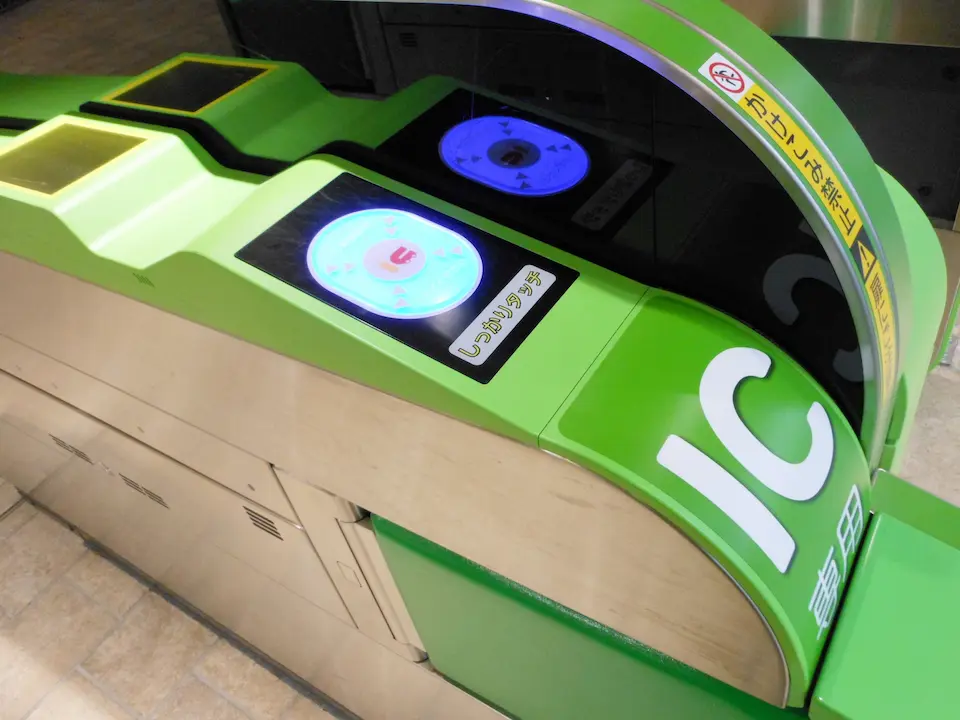
The easiest way to pay for most train rides in Japan is with an IC card — a rechargeable transit card that tap-pays you onto trains, subways, and many buses.
This section gives the rail-system overview. For the current visitor decision table, purchase locations, mobile setup, Android limitations, top-ups, expiry and refund rules, see the complete Suica and Welcome Suica guide.
Major IC Cards
- Suica — issued by JR East (Tokyo area)
- PASMO — issued by PASMO Co., Ltd., a consortium of private railways, subway operators, and bus operators in the Greater Tokyo Area (Tokyo Metro is one of many participating operators, not the sole issuer)
- ICOCA — issued by JR West (Osaka/Kyoto area)
- Other regional cards: TOICA (Nagoya), SUGOCA (Kyushu), Kitaca (Hokkaido), etc.
Interoperability: The major IC cards work across most of Japan's major IC card areas for individual trips. However:
- They do not work on every train or bus line — some rural routes and a few private lines don't participate
- They generally cannot be used for a single local-train journey that crosses IC card area boundaries (e.g., tapping in at Tokyo and trying to ride local trains all the way to Sendai or Nagoya). Stick to one area per IC-paid local-train trip, or buy a regular ticket for cross-area travel
Physical Cards Are Back in Stock (2025)
Physical Suica, PASMO, and Rinkai Suica sales were restricted during the 2022-2024 IC chip shortage. Regular non-personalized Suica and PASMO resumed sales on March 1, 2025, and physical cards are widely available again at JR East and major private rail ticket counters in Tokyo and Osaka.
For short-term visitors, Welcome Suica (the tourist-only red Suica) is also available again. Since March 27, 2025, you can buy it at:
- Narita Airport Terminal 1 / 2-3 stations
- Haneda Airport Terminal 3 (Tokyo Monorail) station
- Tokyo, Shibuya, Shinjuku, Ikebukuro, Ueno, Yokohama, Sendai stations
- JR EAST Travel Service Centers, JAPAN RAIL CAFÉ, and the Takanawa Gateway Travel Service Center
One Welcome Suica per person.
Mobile Suica: Important Android Caveat
- iPhone: You can add Suica, PASMO, ICOCA, or TOICA to Apple Wallet. This works for all iPhones sold globally (since iPhone 8). Just open Wallet → + → Transit Card → Japan.
- Android: Mobile Suica is effectively unavailable to most overseas-market Android phones. The vast majority of those devices do not support Japan's required mobile FeliCa/Osaifu-Keitai environment. Android users from overseas should plan to use a physical card such as Suica, PASMO, Welcome Suica, or ICOCA instead.
How Much to Load
¥3,000-5,000 is a reasonable starting amount for a few days of city travel. You can top up at any ticket machine or convenience store.
Ticket Machines
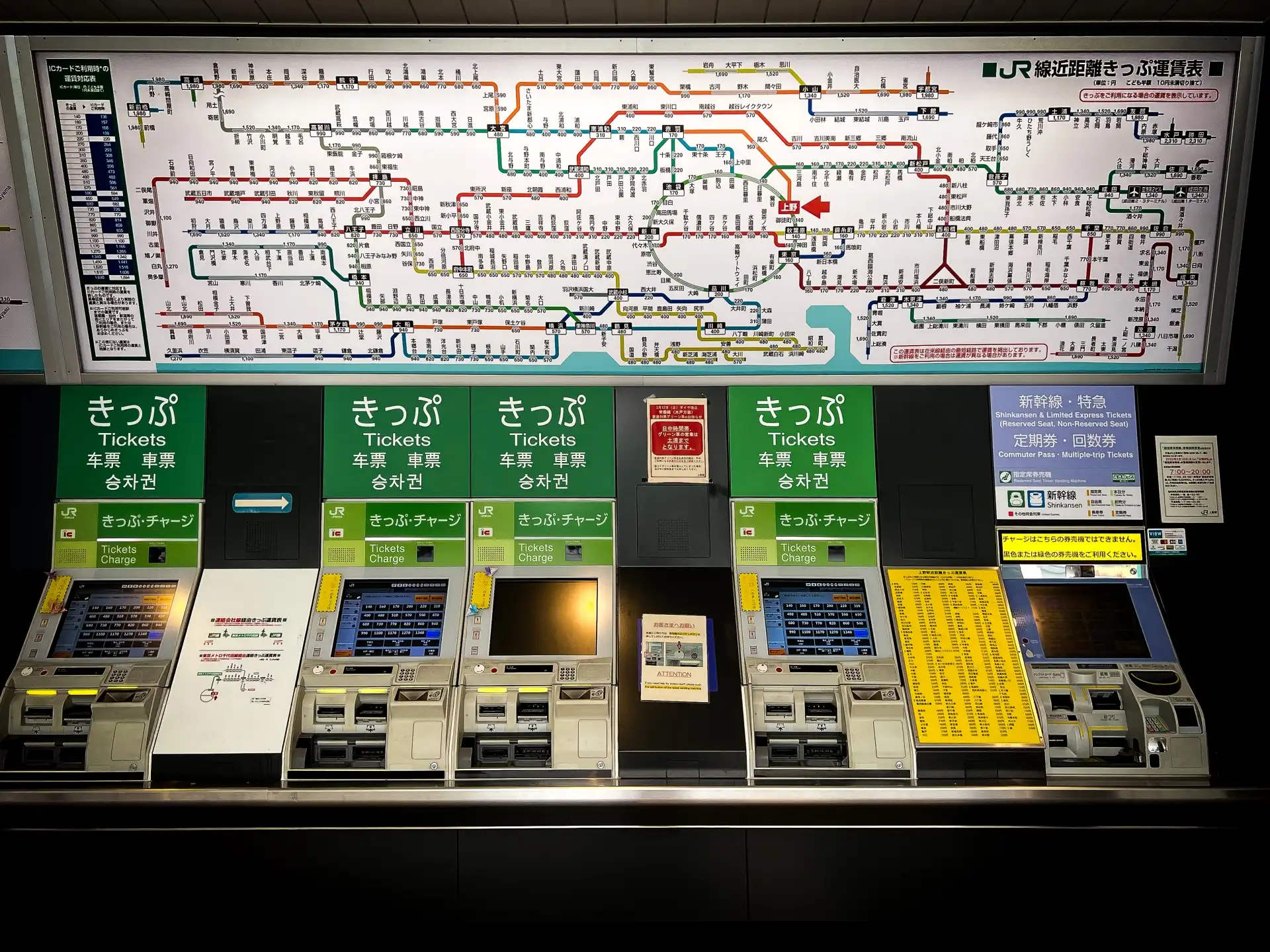
Most major stations have ticket machines with an English language option:
- Press the "English" button on the screen
- Select your destination or fare amount
- Insert cash or tap your IC card to charge
- Take your ticket from the slot below
For Shinkansen and Limited Express reserved seats, use the green ticket machines at major stations, the ticket office (みどりの窓口), or book online.
For Tokyo, Kyoto, Shin-Osaka and other stops on the Tokaido, Sanyo and Kyushu Shinkansen, our SmartEX booking guide walks through choosing a seat, reserving space for oversized baggage and boarding with a QR ticket, IC card or paper ticket.
Japan Rail Pass
The Japan Rail Pass is a multi-day unlimited-ride pass for JR trains nationwide, including most Shinkansen (with the Nozomi/Mizuho supplement rule above).
| Pass Type | 7 Days | 14 Days | 21 Days |
|---|---|---|---|
| Ordinary | ¥50,000 | ¥80,000 | ¥100,000 |
| Green (First Class) | ¥70,000 | ¥110,000 | ¥140,000 |
Prices are current official web prices as of May 2026. Some overseas-agent prices are scheduled to change from October 2026 — check the official JR Pass site before buying.
Is the JR Pass worth it?
After the October 2023 price increase (around 70%), the JR Pass is no longer automatically worth it. A simple Tokyo↔Kyoto round trip alone does not pay for a 7-day pass. Whether it pays off depends on the total distance you'll travel within the pass window — not the number of cities.
A practical rule of thumb: consider the JR Pass only if you'll do multiple long-distance JR Shinkansen trips within 7/14/21 days. For mixed itineraries, run the numbers first.
We break this down for popular itineraries in our JR Pass worth-it guide, or use our free JR Pass Calculator to check your specific routes in seconds.
 Best for Multi-City
Japan Rail Pass (7-Day)
Why it may fit
Unlimited rides on JR trains nationwide, including most Shinkansen. Best value when your itinerary includes multiple long-distance trips.
Before booking
Check the live price, availability, eligibility, and terms before paying.
Oversized Baggage on the Shinkansen
This rule trips up a lot of travelers with big suitcases.
On the Tokaido, Sanyo, Kyushu, and Nishi-Kyushu Shinkansen (Tokyo ↔ Shin-Osaka ↔ Hakata ↔ Kagoshima-Chuo, plus Nagasaki), baggage with total dimensions (length + width + height) over 160 cm and up to 250 cm requires:
- A free reservation for a seat with an oversized-baggage area (specific rear-row seats with storage behind them)
- The reservation is made at ticket machines, ticket offices, or online when booking your seat
- Without a reservation, you'll be charged a ¥1,000 oversized-baggage fee at the train
Baggage over 250 cm is not allowed on board — use a luggage delivery service (Yamato/Sagawa) or ship it ahead via takkyubin to your accommodation.
These rules apply specifically to the lines above. Other Shinkansen lines (Tohoku, Joetsu, Hokuriku, Hokkaido) do not have the same 160 cm reservation requirement, though courtesy and overhead rack capacity still apply.
Don't want to wrestle a big suitcase onto the train at all? On a day trip, a long layover, or the gap between checkout and your next train, drop your bags at a staffed luggage-storage spot and travel light. Our Japan luggage-storage guide compares coin lockers, reservable apps and hotel-to-hotel delivery for each situation.
 Code JAPANODE · 6% off
Radical Storage — Luggage Storage Across Japan
Why it may fit
Coin lockers fill up fast and won't fit a big suitcase. Radical Storage lets you drop bags by the day at hundreds of vetted spots near stations and sights, so you can sightsee or ride between stops hands-free. Use code JAPANODE for 6% off.
Before booking
Check the live price, availability, eligibility, and terms before paying.
Navigating the System
Essential Apps
- Google Maps: Works very well for Japan train navigation — enter your start and end points
- Navitime / Yahoo! Transit Japan: More detailed Japanese transit apps with real-time delay info
- Japan Travel by Navitime: English-friendly with offline route search
You'll need mobile data for these apps — see our best eSIM guide for Japan.
Reading Station Signs
Japanese stations display information in 4 scripts:
- Kanji (漢字) — Chinese characters
- Hiragana (ひらがな) — Phonetic Japanese script
- Katakana (カタカナ) — Used for foreign words
- Romaji — Latin alphabet — this is what you'll read
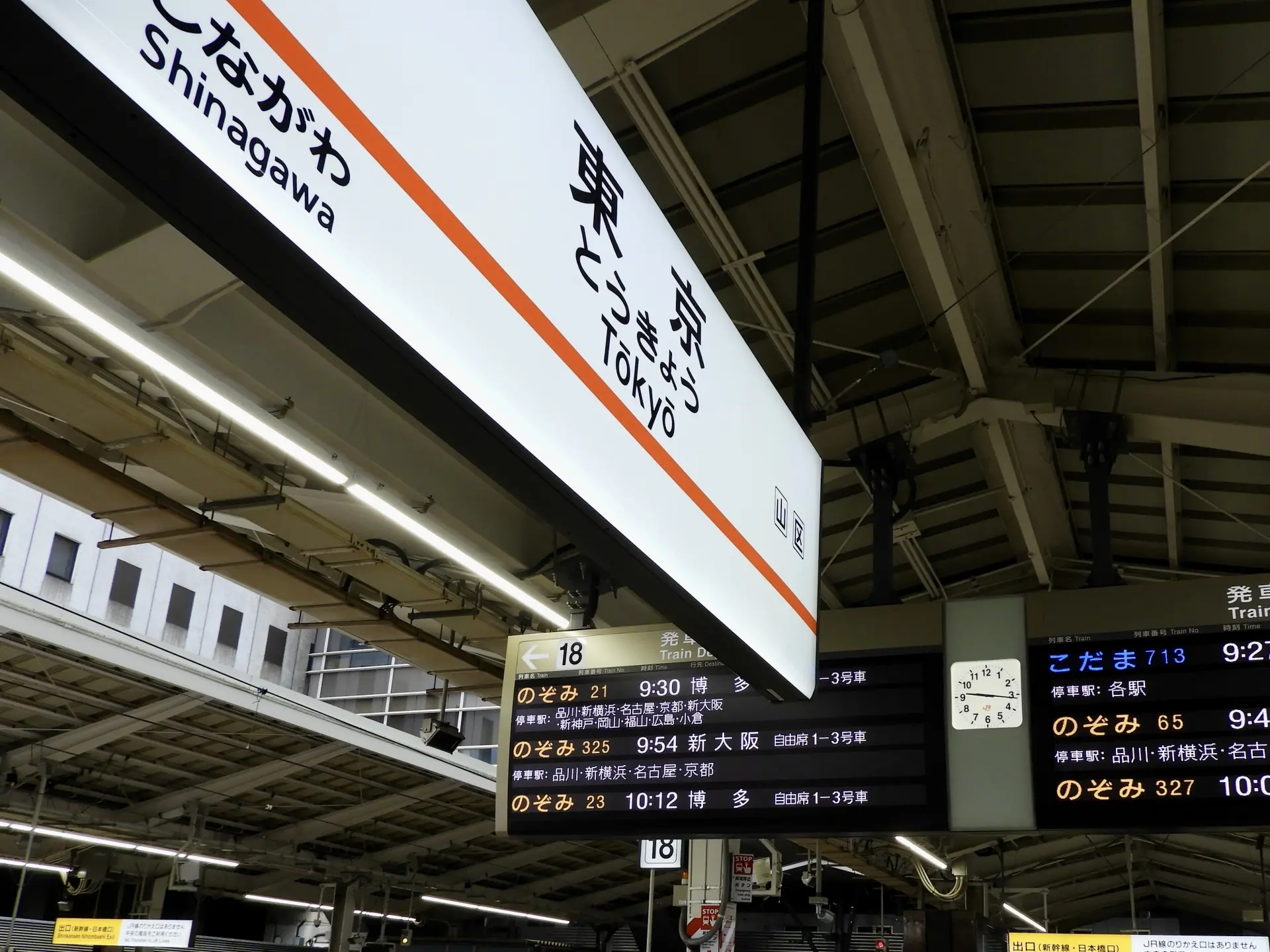
Every major station has signs in romaji, so you can always find your way. Train cars also display the next station in English on the digital screens above the doors.
Platform Etiquette
- Line up on the marks on the platform floor — they show where the doors will open
- Let passengers exit first before boarding
- No talking on the phone in train cars (texting is fine; calls are considered rude)
- Keep your backpack in front of you during rush hours
- Priority seats (優先席) are for the elderly, pregnant, those with infants, and people with disabilities — give them up if asked
Money-Saving Tips
- Run the numbers on a JR Pass — it's no longer automatically worth it. Use our calculator
- Compare regional passes with your actual fares — examples include JR West's Kansai-Hiroshima Pass and the current JR EAST PASS. Our regional JR pass guide explains coverage and consecutive-day limits. Neither a regional nor a national pass is worthwhile unless the eligible journeys justify its price.
- Use IC cards for most local trains, subways, and buses in major cities, but keep some cash — rural routes and a few buses may not accept IC cards
- Avoid rush hours for comfort: morning 7:30-9:30 and evening 17:30-19:30 — packed and not pleasant with luggage. Our Tokyo rush-hour guide shows the busiest measured sections, directions and tourist-friendly alternatives.
- Night buses are much cheaper than the Shinkansen for long distances, but less comfortable. Decent for a single overnight Tokyo↔Kyoto or Tokyo↔Osaka leg
For more first-trip tips, see our First Time in Japan guide. And since typhoons and heavy snow occasionally disrupt even Japan's punctual trains, check both your travel insurance for Japan and our cancellation-and-delay claim guide before you go.
The JR Pass price was raised ~70% in October 2023. Check if it's worth it for your trip →
Last verified: 2026-05-12. Primary sources: Japan Rail Pass official site, JR-East Welcome Suica, JR Central Oversized Baggage Rules, JR West Oversized Luggage. Service patterns, prices, and rules can change — verify with the official sites before travel.
Make it your trip
Still planning your Japan trip?
Pick the question on your mind. Compare your options, check the details and take one more thing off your list.
Would a JR Pass save you money?
Add your train journeys and compare individual tickets with the nationwide pass. See which costs less for your route.
Calculate my rail costs
Which eSIM fits your Japan trip?
Maps, messages, hotspot use: compare five providers by data allowance, network and plan limits before you choose.
Find my Japan eSIM
How much can you fit into one week?
Connect Tokyo, a Fuji or Hakone day trip, Kyoto and Osaka with a day-by-day route, travel costs and booking advice.
Explore the 7-day routeFrequently Asked Questions
No, you can use unreserved cars (自由席) on many services. Nozomi normally has unreserved cars but becomes reserved-only during designated peak periods; Mizuho continues to offer unreserved seats. Other services such as Hayabusa are reserved-only year-round, so check the exact train before boarding.
Japanese trains are famously punctual — Shinkansen delays average under a minute. However, weather events (typhoons, heavy snow) or accidents can cause delays, especially on local lines. Real-time delay info is shown on station screens and in apps like Navitime.
On the Tokaido, Sanyo, Kyushu, and Nishi-Kyushu Shinkansen, baggage with total dimensions over 160 cm (and up to 250 cm) requires a free advance reservation for an oversized-baggage seat. Bringing oversized baggage without a reservation incurs a ¥1,000 fee. Baggage over 250 cm is not allowed on board — use a delivery service instead.
Since October 2023, yes — but only by purchasing a separate NOZOMI/MIZUHO Ticket in addition to your JR Pass before boarding. Without that supplement, the Hikari, Sakura, and Kodama services remain the standard JR Pass options.
No. Most trains stop running roughly between midnight and 5 AM. Plan accordingly, take a taxi, or consider a capsule hotel near a major station if you miss the last train.

Written by
JAPANODE
Based in Japan, sharing real travel tips & local insights for visitors. Follow us on Instagram @thejapanode for daily Japan content.
You Might Also Like
 Transportation
Is the JR Pass Worth It in 2026? Prices & Break-Even Routes
15 min read
 Planning
Visit Japan Web 2026: How to Register (Step-by-Step) + QR Code Guide
13 min read
 Planning
First Time in Japan: 15 Things You Need to Know Before You Go
19 min read
ConnectivityBest eSIM for Japan 2026: 5 Providers Compared
20 min read