On this page
Image disclosure: The hero and affiliate-card images are AI-generated editorial illustrations. They do not depict an actual wrestler, stable, guide, tournament, seat or venue.
You can build a Japan trip around a Grand Sumo tournament, watch active wrestlers train, or fit a 75–90-minute sumo show into a Tokyo sightseeing day. The right booking depends on what you want to see: official competition, a working stable or an entertaining introduction with English explanation and photos.
This article contains affiliate links. JAPANODE may earn a commission if you book through them, at no additional cost to you. For official tournaments, check direct tickets and face-value resale before paying for a package.
Choose your sumo experience
| Your plan | Choose this | Before you book |
|---|---|---|
| A short, fun introduction in Tokyo | Shinjuku sumo show · 75–90 minutes | English presentation and photos; audience challenge is by lottery |
| Ranked wrestlers in official competition | Grand Sumo tournament · allow an afternoon | Match the city and tournament dates to your trip |
| Watch active wrestlers train | Tokyo morning practice · around 1.5–2 hours for the listed tour | Quiet observation, stricter rules and a training-dependent schedule |
The November 8–22, 2026 Kyushu tournament is approaching. As checked October 14, the Japan Sumo Association lists general admission tickets as sold out. See the Fukuoka booking options below for official resale and a chair-seat package with pre-entry support. A tour listing being online does not guarantee seats for your dates.
Tokyo sumo show in Shinjuku
Choose this if you want to enjoy sumo during a short Tokyo visit without matching the tournament calendar. The Shinjuku Sumo Show & Experience with Photo combines demonstrations, English presentation, an introduction to sumo traditions and a photo with the wrestlers in 75–90 minutes.
On October 14, 2026, the GetYourGuide listing showed 4.9/5 from 9,164 reviews. That is useful feedback from previous guests, not our own attendance review. We recommend this format for travelers who want an accessible introduction and audience interaction; choose a tournament if official competition is the reason you are going.
What your ticket includes: the show, an English-speaking MC, bottled water and photos. The chance to challenge a wrestler is limited to six guests selected by lottery per show, so book for the performance rather than a guaranteed turn in the ring. The listing offers cancellation up to 24 hours in advance; check the cutoff and meeting point for your selected option.
Shinjuku Sumo Show & Experience with Photo
See the demonstrations, understand the rituals in English and leave with a wrestler photo. Select your travel date to compare show times and the current price.
Best for
Tokyo visitors who want an entertaining sumo introduction within a short sightseeing window.
Before booking
A visitor show rather than an official tournament. Only six guests per show can join the wrestler challenge, selected by lottery.
Live price & availability
Powered by GetYourGuide · we may earn a commission at no extra cost to you.
Choose your date and full group size before comparing options. Confirm the venue shown on that option, arrive on time and leave the rest of the day for Shinjuku. For other indoor activities to pair with it, see our Tokyo rainy-day guide.
Fukuoka sumo tickets for November 2026
The Kyushu Grand Sumo Tournament runs November 8–22, 2026 at Fukuoka Kokusai Center. General sales began September 19; the official ticket page now reports a sell-out. If your Kyushu trip overlaps those dates, check these options before fixing your afternoon plans:
- Official face-value resale: the Ticket Oosumo resale service sells returned tickets first-come, first-served. Availability varies, fees apply and the purchase flow is in Japanese.
- A chair-seat package with pre-entry help: the listing below includes a tournament chair seat, an English introduction and help entering the venue. The guide does not accompany you during the matches. Seat positions cannot be requested.
Compare the total carefully. Our October 14 check for November 10, one adult returned an available 13:30 option at ¥100,000. That is a date-specific snapshot, not a starting-price promise or a typical ticket price. At that price, this is an expensive fallback for someone set on attending; check official resale first. Other dates and packages may have different prices and conditions.
Fukuoka Grand Sumo Tournament: Chair Seat & Pre-entry Support
A tournament chair-seat ticket with an English introduction and entry assistance. Compare the current total with official resale before booking.
Best for
Travelers already visiting Fukuoka during the tournament who accept the package price and want help before entry.
Before booking
No guide during the matches and no choice of seat position. Our November 10 check showed ¥100,000 for one adult; verify your date's total.
Live price & availability
Powered by GetYourGuide · we may earn a commission at no extra cost to you.
The listing allows up to three guests per booking; separate bookings for larger groups may not sit together. It showed cancellation up to 24 hours in advance when checked. Confirm the final cancellation cutoff, meeting time and seat details before paying. If your route stays in Tokyo, the Shinjuku show above offers a different sumo experience without adding a trip to Kyushu.
Editorial note: The Shinjuku show details and Fukuoka ticket status above were checked on October 14, 2026. The background tournament, venue and museum research below was checked September 10 unless stated otherwise. Marketplace descriptions and customer reviews are not presented as our own experience.
2026 and 2027 sumo tournament dates
Professional sumo runs six Grand Tournaments (honbasho) each year. Each one lasts 15 straight days, from Sunday to Sunday. Tokyo hosts three; Osaka, Nagoya and Fukuoka host one each. A ticket covers one full tournament day, not all 15 days.
2026 schedule and current ticket status
| Tournament | Dates | City · venue | General sale | Status on Oct 14 |
|---|---|---|---|---|
| January | Jan 11–25 | Tokyo · Ryōgoku Kokugikan | Dec 6, 2025 | Finished |
| March | Mar 8–22 | Osaka · EDION Arena Osaka | Feb 7, 2026 | Finished |
| May | May 10–24 | Tokyo · Ryōgoku Kokugikan | Apr 4, 2026 | Finished |
| July | Jul 12–26 | Nagoya · IG Arena | May 16, 2026 | Finished |
| September | Sep 13–27 | Tokyo · Ryōgoku Kokugikan | Aug 8, 2026 | Finished |
| November | Nov 8–22 | Fukuoka · Fukuoka Kokusai Center | Sep 19, 2026 | General tickets sold out · resale and package options |
2027 schedule
| Tournament | Dates | City · venue | General sale |
|---|---|---|---|
| January | Jan 10–24 | Tokyo · Ryōgoku Kokugikan | Dec 5, 2026 |
| March | Mar 14–28 | Osaka · EDION Arena Osaka | Feb 6, 2027 |
| May | May 9–23 | Tokyo · Ryōgoku Kokugikan | Apr 10, 2027 |
| July | Jul 11–25 | Nagoya · IG Arena | May 15, 2027 |
| September | Sep 12–26 | Tokyo · Ryōgoku Kokugikan | Aug 7, 2027 |
| November | Nov 14–28 | Fukuoka · Fukuoka Kokusai Center | Sep 18, 2027 |
These dates come from the Japan Sumo Association's official multi-year schedule. Recheck it before buying flights or non-refundable accommodation: the sale date is the day to act, not a loose reminder to start researching.
Nagoya guides published before 2025 may name the old Aichi Prefectural Gymnasium. The July tournament now uses IG Arena beside Meijo Park. The other three venues remain Ryōgoku Kokugikan in Tokyo, EDION Arena Osaka and Fukuoka Kokusai Center.
How to buy official sumo tickets from overseas
The Japan Sumo Association links directly to Ticket Oosumo English, the official English sales channel. For the September 2026 Tokyo tournament it accepted credit cards, charged a ¥2,000 service fee per ticket, and required collection at a 7-Eleven in Japan. Those details can change by tournament, so read the live sales page before checkout.
The hidden difficulty is timing. Japanese-language fan-club and ticket lotteries happen before the English first-come, first-served general sale. Some premium seat types never appear on the English page. That means “general sale day” is not the first time any inventory has been offered.
The booking sequence that gives you the best chance
- Open the official schedule and identify the general sale date for your tournament.
- Create your Ticket Oosumo account before that date and make sure its emails reach you.
- Convert 10:00 Japan time to your local time and sign in early. The exact start time is shown on the tournament sales page.
- Prioritize a weekday in the first week if your itinerary is flexible. Weekends, public holidays and the final day are usually the hardest targets.
- Choose a chair seat first if you are solo, a couple, or anyone who finds floor sitting difficult.
- Read the final total before paying. Official English sales may add a per-ticket service fee.
- Follow the confirmation email to issue the ticket at a Japanese 7-Eleven. Do not leave collection until the last minute, and keep the ticket safe: the official page says a lost ticket does not allow entry.
Chair seats have a back, are sold per person, cost less than most boxes and avoid sitting cross-legged on floor cushions for hours. A box is more traditional and social, but it is compact and usually priced as a whole unit. Choose atmosphere only after checking the floor-sitting trade-off.
Sumo seat types and 2026 prices
The exact map and inventory change by venue. The table below uses the official September 2026 Tokyo prices because it shows the most useful spread for first-time visitors.
| Seat | Weekday | Weekend / holiday | Sold as | English-sale note |
|---|---|---|---|---|
| Ringside (tamari) | ¥20,000 | ¥20,000 | 1 person | Japanese Ticket Oosumo only |
| Box S | ¥56,000 | ¥60,000 | 4-person box | Japanese Ticket Oosumo only |
| Box A | ¥48,000 | ¥52,000 | 4-person box | Listed for English sale |
| Box B | ¥40,000 | ¥42,000 | 4-person box | Listed for English sale |
| Box C | ¥34,000 | ¥38,000 | 4-person box | Listed for English sale |
| Chair S | ¥9,000 | ¥9,500 | 1 person | Listed for English sale |
| Chair A | ¥8,000 | ¥8,500 | 1 person | Listed for English sale |
| Chair B | ¥5,000 | ¥5,500 | 1 person | Listed for English sale |
| Chair C | ¥3,500 | ¥4,000 | 1 person | Listed for English sale |
Prices include tax but not the English service fee. Children aged four or older need a ticket, there is no general child discount on these categories, and box prices are for the complete box even if fewer than four people use it.
- Ringside / tamari: closest to the ring, but strict and hard to buy. For September 2026 they were offered only through the Japanese ticket service. Food, drinks, phones and photography are prohibited in these seats, and a wrestler can fall into the area.
- Box / masu: floor cushions inside a compact square. Remove your shoes. These are atmospheric, but four adults may find the space tight.
- Chair / arena: conventional upper-tier stadium seats. They are the lowest-risk choice for comfort, budget and smaller groups.
Confirm your tournament's official price and seat page rather than assuming Tokyo's categories apply in Osaka, Nagoya or Fukuoka.
What to do when tickets are sold out
Use this order:
- Check the official face-value resale service. Returned inventory appears intermittently and sells first-come, first-served. The service is Japanese-language, requires an account, and the Ticket Oosumo site currently uses phone-number verification. Buying an alert does not reserve a ticket.
- Compare a ticket-and-guide package. Package operators may have different availability. Check the seat, total price and whether the guide stays during the matches or only helps before entry; the Fukuoka option above provides pre-entry support only.
- Choose the alternative that fits your interests. Try the Shinjuku show for English explanation, demonstrations and photos, or morning practice to watch active wrestlers train. Neither is an official tournament.
Avoid social-media sellers and unauthorized resale websites. The association says prohibited resale or transfer can lead to refused entry. Also do not plan on a same-day box-office miracle: the official September page says there is no day-of sale when advance inventory is sold out.
If the official allocation is gone, start with a package for the city and tournament that actually overlaps your trip. The Tokyo option below combines a tournament ticket with English explanation; treat the seat class, date and meeting point shown at checkout—not the marketing photo—as the product you are buying.
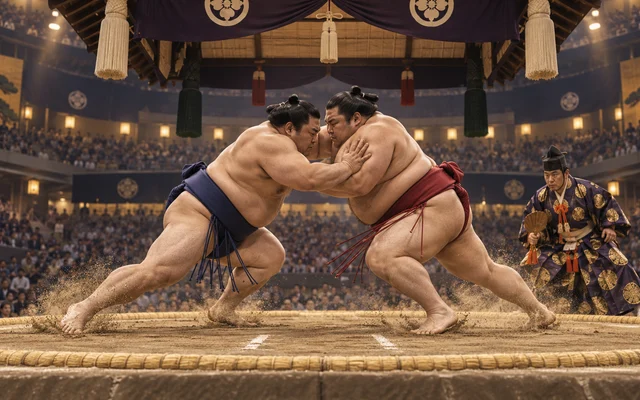 Tokyo honbasho · English guide
Tokyo Grand Sumo Tournament Tour with Chair Seat
Actual Grand Sumo, not a visitor show
Why it may fit
A guided live-tournament package with a second-floor chair seat and English explanation. It is easier to understand than watching alone, but costs more than an official direct ticket and the exact seat location cannot be chosen.
Before booking
Check the live price, availability, eligibility, and terms before paying.
Tournament packages are seasonal. A listing may stay online after its tournament has finished, so select a date and confirm the city before comparing prices. For this November, use the Fukuoka section above; for other trips, start with the 2026–2027 calendar.
What a tournament day is actually like
A sumo day is a slow build, not a fixed-time event. The lowest divisions wrestle in the morning, often before the stands fill; the ceremony and headline matches arrive in the afternoon. The official September 2026 page lists 8:45 opening for days 1–12, 10:30 on days 13–14, and 10:00 on the final day. Other tournaments publish their own daily times.
The rhythm, roughly:
- Morning–early afternoon: lower-division bouts. The arena is quieter, food and merchandise lines are shorter, and you can watch how the level changes division by division.
- Around 2:00 pm: the jūryō division enters, then the top makuuchi division's ring-entering ceremony (dohyō-iri) — wrestlers in ornate aprons circling the ring — followed by the yokozuna's own entrance if there is one.
- Roughly 3:30–6:00 pm: the makuuchi bouts, the headline matches, building to the day's final bout and the bow-twirling yumitori-shiki that closes the day.
If you only care about the top division, arriving around 2:00 pm is enough for the published start of the main program. Come earlier for the full progression and easier browsing before the concourses fill. Buy food and drinks inside the venue rather than carrying them in; policies vary, and tour listings may impose stricter meeting or entry rules than a direct ticket.
Guided packages remove much of the language barrier, but they add a handoff step that direct tickets do not have. Save the meeting point offline, arrive early and keep the booking confirmation accessible even when your mobile connection is poor.
Etiquette and the rules that catch tourists out
Sumo is relaxed for spectators in most seats, but a few things trip people up:
- Tamari-seki (ringside) is strict: no phones, no cameras, no eating or drinking, and you sit still. If you somehow get these seats, follow the rules to the letter.
- Photos are generally permitted from boxes and chairs, but do not block aisles, use intrusive equipment or ignore instructions from staff.
- Don't throw your cushion. Tossing zabuton when a favourite loses is a TV-famous tradition, but it is officially discouraged and can hurt people. Don't start it.
- Stay seated during bouts and don't leave mid-match. Move between bouts, not during them, and try not to file out before the final match if you can help it.
- Check the re-entry rule for your tournament. September 2026 in Tokyo allows one re-entry if you return by 17:00. That replaces the older blanket advice that leaving always ends your day.
Can't get tickets, or no tournament on? See sumo another way
A sold-out tournament—or a trip that simply does not overlap one—is not the end of the road. Tokyo has the strongest set of alternatives, but each one is a different experience.
Tokyo morning practice
Morning practice (asageiko). A sumo stable (heya) is a working home and training facility, not a drop-in attraction. The realistic route for visitors is a guided or pre-arranged viewing, which handles permission and explains rules about silence, floor seating, photography and leaving early. Practice can be cancelled or moved around tournaments and regional tours, so flexibility matters.
The listing below visits a real working stable with an English-speaking guide and stays through the morning practice. A photo with wrestlers may be possible, but it depends on the day. The main trade-offs are strict etiquette, no video, no food or drinks, and a minimum age of 11.
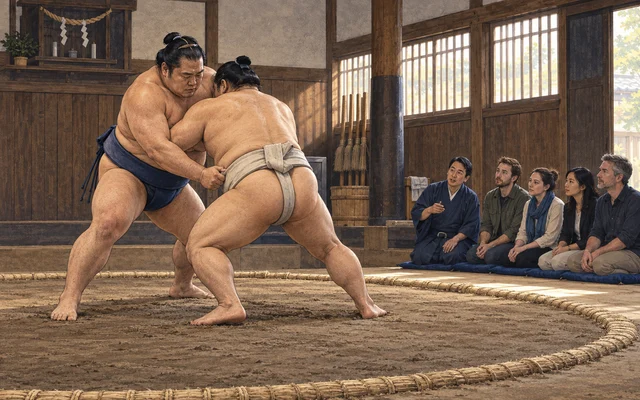 Real working stable · Ages 11+
Tokyo Sumo Stable Morning Practice Visit
Watch active wrestlers train at close range
Why it may fit
A 1.5-to-2-hour arranged visit to a real Tokyo sumo stable. Watch active wrestlers train with English explanation, then take a photo if the stable permits it that day. Guests must remain quiet and stay until practice ends.
Before booking
Check the live price, availability, eligibility, and terms before paying.
Ryōgoku, Tokyo's sumo town. The district around the Kokugikan is the easiest independent option. The Sumo Museum on the arena's ground floor is free. In regular periods it is normally open 10:00–16:30, with last entry at 16:00, and closes Saturdays, Sundays and national holidays with exceptions. During Tokyo tournaments it is normally open 12:30–16:00 to ticket holders only. The calendar includes additional closure periods—September 1–12, 2026 was one—so check the official museum schedule rather than arriving on the general hours alone.
The neighbourhood's chanko-nabe restaurants are open to anyone, and several have direct connections to retired wrestlers. A Ryōgoku walk and museum visit do not reproduce a live bout, but they are the lowest-cost way to add genuine sumo context.
Sumo shows. Visitor-focused shows pair demonstration bouts with explanation, photos and sometimes chanko. They are entertainment rather than a ranked professional tournament or active-stable practice. In Tokyo, check the Shinjuku show above. In Kansai, compare the Osaka option below. Meal inclusions vary by product; the Shinjuku listing includes bottled water, not a meal.
The Osaka option below is the clearest fit for travelers who want to understand the basics, see former professionals demonstrate techniques and possibly try a friendly audience challenge. It runs outside the official tournament calendar, making it much easier to fit into a Kansai itinerary.
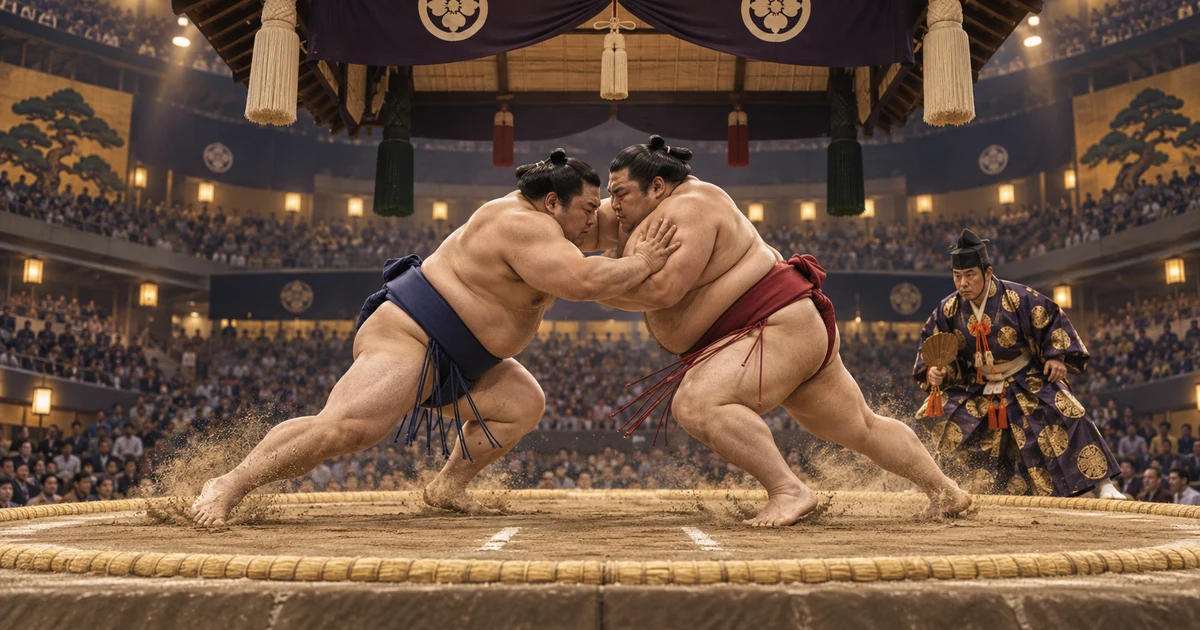
Osaka Live Sumo Show & Audience Challenge
Works even when no tournament is running
Why it may fit
A 1-to-1.5-hour English-guided demonstration by former professional wrestlers, covering sumo history, rituals and techniques. Audience members may be invited onto the ring, but participation is not guaranteed.
Before booking
Check the live price, availability, eligibility, and terms before paying.
Jungyō (regional tours). Between tournaments, wrestlers travel to cities around Japan for exhibition events. The association publishes official provincial-tour schedules, but individual ticket pages are often Japanese-only. These events can solve a date-and-location mismatch, though they require more independent planning.
First-timer's pick: which tournament should you go to?
- Tokyo (January, May, September) is the best first choice if your dates are flexible. You get three annual windows, the purpose-built Kokugikan, the museum and the wider Ryōgoku district.
- Nagoya (July) uses the new IG Arena and fits a summer route through central Japan. Do not rely on an older guide that still names the former venue.
- Osaka (March) slots neatly into a Kansai trip; if you are already building one, see our 4-day Kansai itinerary and add a tournament day.
- Fukuoka (November) makes sense when Kyūshū is already part of the trip. Buying a distant domestic train or flight solely because you found a ticket can erase the savings of buying direct.
Choose the tournament that fits your existing route, then shape one day around it. Budget half a day for the build-up or the late afternoon for the top division. Our 7-day Japan itinerary and first-time Japan guide cover the surrounding logistics, while the train system guide explains local rail and long-distance tickets.
How sumo works, in 60 seconds
You win a bout by forcing your opponent out of the ring (over the straw boundary) or making any part of his body other than the soles of his feet touch the ground. Bouts are often over in seconds, decided at the tachiai — the explosive initial charge.
The sport is ranked in six divisions, top to bottom: Makuuchi, Jūryō, Makushita, Sandanme, Jonidan and Jonokuchi. Only the top two (collectively sekitori) are salaried and wrestle every one of the 15 days. Within the elite Makuuchi division, the ranks climb from maegashira up through komusubi, sekiwake and ōzeki to yokozuna, the grand champion. The official ranking sheet, the banzuke, is redrawn after every tournament based on results — which is exactly why a trip to one is never quite the same twice.
Where to next
- Comparing sumo with other bookable highlights? Start at the Japan experience desk.
- Building a wider trip? Start with the 7-Day Japan Itinerary for first-timers or the first-time in Japan guide.
- Catching the Osaka tournament in March? Pair it with our 4-Day Kansai Itinerary.
- Planning another Osaka evening? Our Osaka food-tour comparison helps you choose a guided meal, a city walk or bar hopping. If your sumo show includes a meal, keep a food tour for a different evening.
- Sorting the logistics? The train system guide and accommodation types guide cover getting there and where to stay.
Ready to choose? For a short Tokyo experience, check Shinjuku show times. For official competition this November, compare Fukuoka ticket options. For a working stable, read the morning-practice conditions. Choose the format first, then confirm the date, full price and cancellation terms for your group.
Background research checked September 10, 2026; Fukuoka ticket status and the Shinjuku and Fukuoka listings rechecked October 14, 2026. Primary sources: Japan Sumo Association 2026–2027 tournament schedule, official ticket guide, September 2026 Tokyo ticket page, Sumo Museum information and calendar, and provincial-tour schedule. Ticket availability, fees, seat maps, opening times, re-entry rules and tour inventory can change; confirm the page for your exact tournament and date.
Make it your trip
Still planning your Japan trip?
Pick the question on your mind. Compare your options, check the details and take one more thing off your list.
How much can you fit into one week?
Connect Tokyo, a Fuji or Hakone day trip, Kyoto and Osaka with a day-by-day route, travel costs and booking advice.
Explore the 7-day route
Which eSIM fits your Japan trip?
Maps, messages, hotspot use: compare five providers by data allowance, network and plan limits before you choose.
Find my Japan eSIM
What should your travel insurance cover?
Compare medical cover, cancellation and activity limits across five options, with the exclusions worth checking.
Compare cover & limitsFrequently Asked Questions
The six 2026 grand tournaments run January 11–25 in Tokyo, March 8–22 in Osaka, May 10–24 in Tokyo, July 12–26 in Nagoya, September 13–27 in Tokyo, and November 8–22 in Fukuoka. As of October 14, the first five tournaments have finished and the Japan Sumo Association lists Fukuoka's general admission tickets as sold out. Check official face-value resale and date-specific tour availability.
For the September 2026 Tokyo tournament, individual chair seats cost ¥3,500–9,500 and four-person box seats cost ¥34,000–60,000 per box, depending on class and day. The English Ticket Oosumo service adds ¥2,000 per ticket. Prices and available seat types vary by venue and tournament, so check the official page for your date.
Use Ticket Oosumo English, linked by the Japan Sumo Association. General sales usually begin about one to two months before the tournament at 10:00 Japan time. The 2026 English service accepts credit cards, charges a ¥2,000 fee per ticket and issues tickets at a 7-Eleven in Japan. Register before release day because the English sale follows several Japanese-language advance lotteries and can sell out quickly.
First check the official Japanese-language face-value resale service, where returned tickets appear first-come, first-served. If that is impractical, compare an authorized ticket-and-guide package and verify the exact seat class, meeting point and cancellation terms. Avoid unauthorized resale sites because the Japan Sumo Association may refuse entry.
Yes. A visitor-focused sumo show is an easy introduction: the Shinjuku show takes 75–90 minutes and includes English presentation and photos. It is separate from official competition. Choose an arranged morning-practice visit if you want to watch active wrestlers train, subject to the stable's schedule and stricter etiquette. You can also explore Ryogoku, visit the Sumo Museum when open, or attend a regional jungyo exhibition.
No. It is a visitor show with sumo demonstrations, English explanation and photos, rather than ranked professional competition. The listing showed 4.9/5 from 9,164 reviews on October 14, 2026. Challenging a wrestler is limited to six guests selected by lottery per show; booking does not guarantee participation.
Bouts run all day, but the lower divisions wrestle to near-empty stands in the morning. The top makuuchi division — with the ring-entering ceremonies and the headline matches — generally runs from about 2 pm to roughly 6 pm. If you only want the main action, arriving around 2-3 pm is enough; come earlier for the full build-up and easier photos. Doors usually open in the morning, but times vary by venue and day, so check the official schedule.

Written by
JAPANODE
Based in Japan, sharing real travel tips & local insights for visitors. Follow us on Instagram @thejapanode for daily Japan content.
You Might Also Like
 Itinerary
4-Day Kansai Itinerary: Kyoto, Osaka & Nara (2026 Local's Guide)
18 min read
 Itinerary
7-Day Japan Itinerary for First-Timers: Tokyo, Hakone, Kyoto & Osaka (2026)
20 min read
 Planning
Japan Accommodation Types Explained: Hotels, Ryokan, Capsule Hotels & More
16 min read
 Planning
First Time in Japan: 15 Things You Need to Know Before You Go
19 min read
 Transportation
The Complete Guide to Japan's Train System for First-Time Visitors
16 min read